
New Socialist Webzine
India and the Rise of Religious Nationalism: An Interview with Himani Bannerji (Part 1)


- Details
- Published on Saturday, August 16 2014 15:26
India recently concluded its 2014 federal elections in which a record 550 million people cast their votes, electing Narendra Modi of the right-wing Hindu nationalist Bharatiya Janata Party (BJP) as Prime Minister and securing his party's position with a majority 282 out of 543 seats in Parliament. New Socialist editor Salmaan Khan had the opportunity to discuss the election results with Bengali-Canadian writer, scholar and activist Himani Bannerji. What follows is Part 1 of a three part interview series. In this first piece Dr. Bannerji lays the context for what India looked like going into these elections and outlines the conditions that helped pave the way for the appeal of religious nationalism.
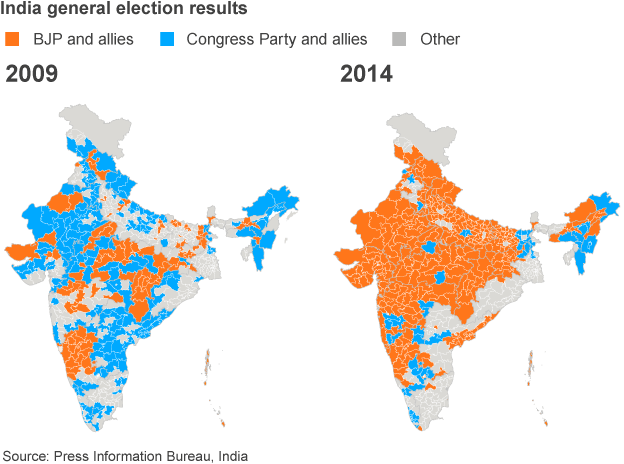
Image source: Press Information Bureau India
Read more: India and the Rise of Religious Nationalism: An Interview with Himani Bannerji (Part 1)
Radical Left Praxis in an Election Year: Lessons for Brazil
- Details
- Published on Friday, August 15 2014 15:42
By Sabrina Fernandes
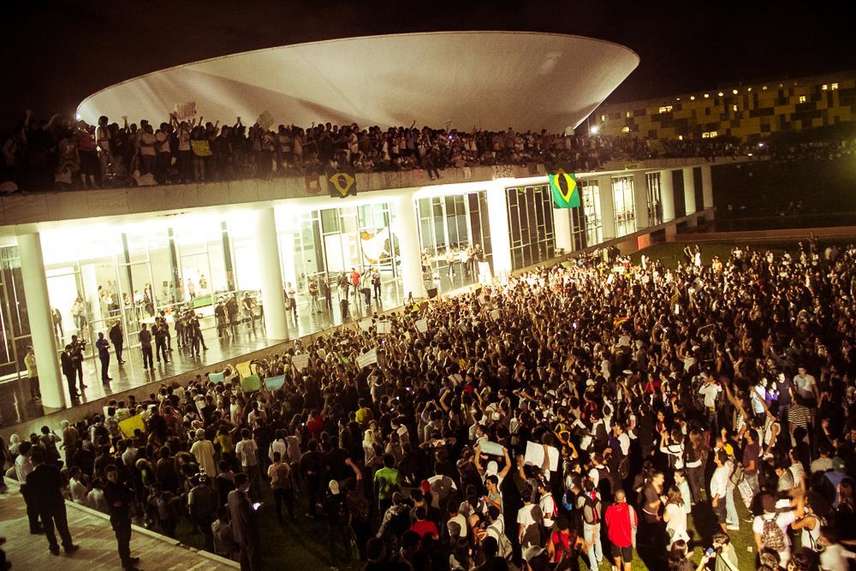
Rally held in June 2013, Brazil. Source: MidiaNinja media collective
The general commentary regarding Brazilian politics is that the "politicians are all the same" or "there is no political alternative" and that even the good ones get corrupted once they reach power. It is no wonder then, that the massive protests of June 2013 throughout Brazil, which were filled with diffuse voices and eclipsed by broad demands, revealed what many termed a crisis of representation.
Read more: Radical Left Praxis in an Election Year: Lessons for Brazil
Colonialism and the Working Class in Canada
- Details
- Published on Sunday, August 10 2014 06:35
 By David Camfield
It's good news that in a number of cities people "are meeting together in growing numbers to explore what it means - and doesn't mean - to stand in solidarity with Indigenous peoples within Canada," as journalist Meg Mittelstedt wrote recently.
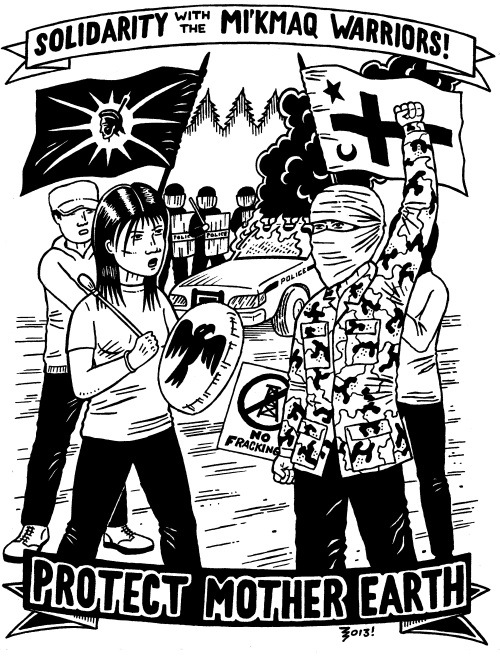
As Mittelstedt notes, this is happening because of the recent upsurge of protest and resistance by indigenous people. This includes Idle No More, campaigns around murdered and missing women, confrontations with companies that hope to make big profits from fracking, pipeline construction, mining and other activities on the traditional territories of indigenous peoples, and conflicts with governments that want to dismantle anything they see as barriers to corporate profit, including environmental regulations and indigenous rights
David Graeber’s Democracy Project: A Review
- Details
- Published on Saturday, August 02 2014 20:37
 By Brian S. Roper
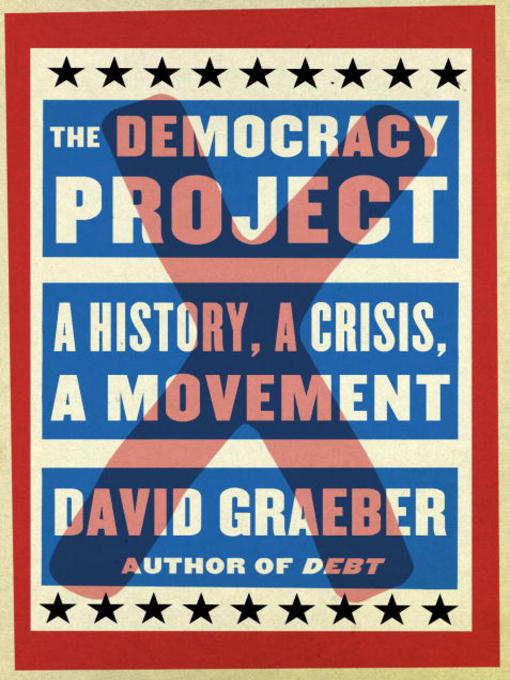
Review of David Graeber, The Democracy Project: A History, a Crisis, a Movement (Allen Lane, 2013)
Was the Occupy movement an anarchist movement? David Graeber certainly thinks so and dedicates much of The Democracy Project depicting it in these terms.
In reality the influence of Anarchism as a diverse political current was highly uneven across the hundreds of occupations that took place globally in September, October and November of 2011. The relative influence of anarchists, socialists, feminists, Indigenous activists, greens, social democrats, left nationalists, and others varied largely according to the relative strengths of these currents prior to the emergence of the Occupy movement, and how they conducted themselves during the course of the encampments.
BC Teachers Strike 2014
- Details
- Published on Sunday, July 13 2014 00:59
By Lisa Descary
It's July in Greater Vancouver. Birds are singing, the sun is shining, and BC public school teachers like me are signing up for picket line shifts. Yes, that's right: I am walking the picket line in July, a time when my school is not even in session. And I don't even teach summer school. How did this happen?