


Tag Archive - review
Another Politics
- Details
-
Published on Wednesday, 18 March 2015 01:48
By Steve D’Arcy
Review of Chris Dixon, Another Politics: Talking Across Today’s Transformative Movements (University of California Press,, 2014)
If there’s one thing that activists often lack, it is opportunities to reflect about what they’re trying to do, and how it might be done differently and better. Often overworked and pressured to focus on pragmatic and tactical questions under urgent timelines, it can be difficult to give political and strategic reflection the attention it deserves.
Car Culture: A Dead-End Road
- Details
-
Published on Friday, 24 February 2012 01:48
Review of Bianca Mugyenyi and Yves Engler, Stop Signs: Cars and Capitalism on the Road to Economic, Social and Ecological Decay (Fernwood/RED, 2011).
By Harold Lavender
Building an Infrastructure of Dissent
- Details
-
Published on Tuesday, 17 February 2015 09:00
By Matthew Brett
Review of Alan Sears, The Next New Left: A History of the Future (Fernwood Publishing, 2013)
Lessons for North American Labour from Workplace Organizing Abroad
- Details
-
Published on Monday, 27 October 2014 15:07
Review of New Forms of Worker Organization: The Syndicalist and Autonomist Restoration of Class-Struggle Unionism, edited by Immanuel Ness, Oakland (PM Press, 2014)
By Steve Early
Playbook for Progressives
- Details
-
Published on Monday, 23 January 2012 02:01
By Maryann Abbs
Review of Eric Mann, Playbook for Progressives: 16 Qualities of the Successful Organizer (Boston: Beacon Press, 2011).
David Graeber’s Democracy Project: A Review
- Details
-
Published on Saturday, 02 August 2014 20:37
 By Brian S. Roper
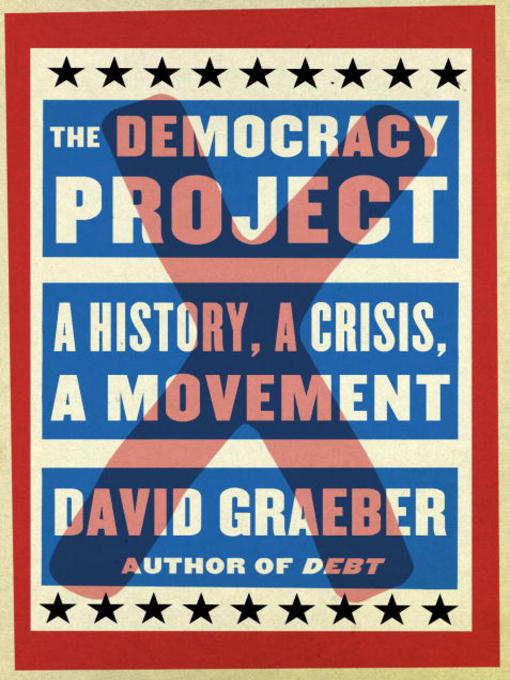
Review of David Graeber, The Democracy Project: A History, a Crisis, a Movement (Allen Lane, 2013)
Was the Occupy movement an anarchist movement? David Graeber certainly thinks so and dedicates much of The Democracy Project depicting it in these terms.
In reality the influence of Anarchism as a diverse political current was highly uneven across the hundreds of occupations that took place globally in September, October and November of 2011. The relative influence of anarchists, socialists, feminists, Indigenous activists, greens, social democrats, left nationalists, and others varied largely according to the relative strengths of these currents prior to the emergence of the Occupy movement, and how they conducted themselves during the course of the encampments.
Bolivia Under Evo Morales
- Details
-
Published on Sunday, 27 November 2011 15:01
By Sarah Hines
Review of Jeffery Webber, From Rebellion to Reform in Bolivia: Class Struggle, Indigenous Liberation and the Politics of Evo Morales (Chicago: Haymarket, 2011).
Bolivia has been on forefront of challenges to neoliberalism in Latin America and the Global South, and stands out for the level of autonomy and power achieved by its social movements.
Against Austerity: A Crucial Reference Point for the Left
- Details
-
Published on Saturday, 10 May 2014 04:21
By Alan Sears
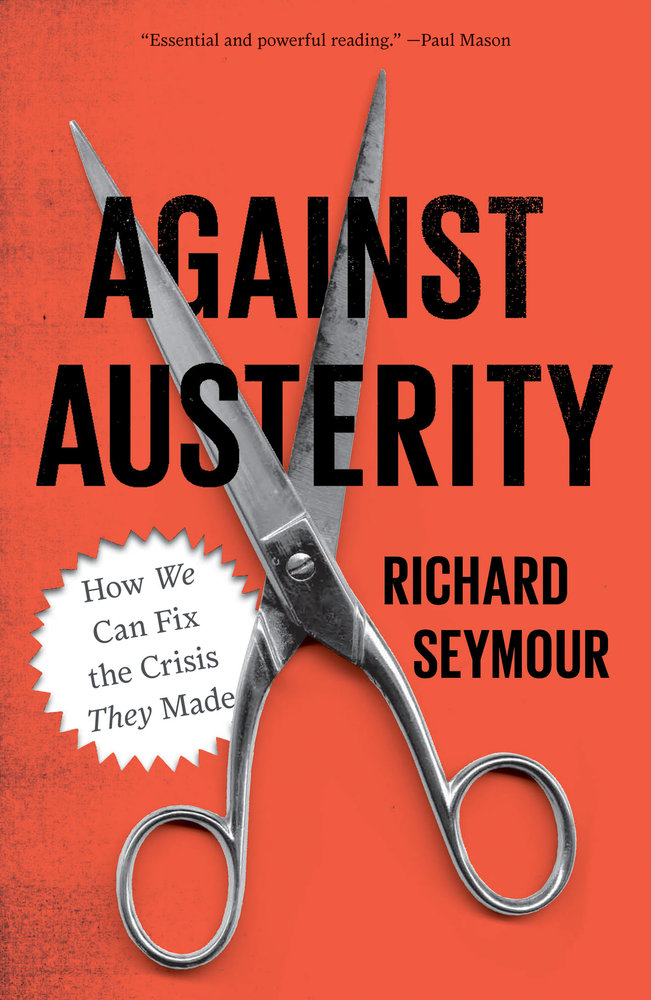 Review of Richard Seymour, Against Austerity: How We Can Fix the Crisis They Made (Pluto Press, 2014)
Richard Seymour's new book is an unflinching and insightful analysis of the current situation in which the radical left finds itself. These are hard times for radicals in Northern Europe and North America. You would think this would be a period of mass radicalization, given the glaring inequality being produced by blatant attacks on social programs, wages, migrants' rights and job security. Yet there are few effective fightbacks, and activist circles in some places are actually getting smaller.
Lenin Reconsidered
- Details
-
Published on Sunday, 30 October 2011 15:42
By Charlie Post
Review of Lars T. Lih, Lenin (London: Reaktion Press, 2011)
Few historical figures on the international revolutionary left have been the subject of as much historical myth-making as Lenin.
Catastrophism: A Climate Justice Activist’s Perspective
- Details
-
Published on Friday, 17 January 2014 02:59
By Harold Lavender
Review of Sasha Lilley (ed.), Catastrophism: The Apocalyptic Politics of Collapse and Rebirth (PM Press, 2012)
Images and talk of catastrophes are pervasive in today’s world. Much discussion of the subject ignores issues of social justice and is not very favourable to a left-wing perspective. Yet the spectre of catastrophic climate change haunts the future. Climate change is wreaking destruction on many, is getting worse and poses a potential threat to life on the planet. This raises many serious questions about how the Left should respond.
Understanding Canadian Imperialism
- Details
-
Published on Sunday, 14 August 2011 22:01
By Harold Lavender
Review of Todd Gordon, Imperialist Canada (Winnipeg: Arbeiter Ring Publishing, 2010).
Over the last decade Canada's carefully constructed if largely mythical image as a peaceful force in the world has rapidly unravelled. This image completely flies in the face of the Canadian state's support for coups, invasions and occupations. Involvement in the decade-long counter-insurgency war in Afghanistan has become the symbol of a more aggressive and militarist Canada.
Toward a New Labour Politics
- Details
-
Published on Saturday, 30 July 2011 12:30
By Maryann Abbs
Review of David Camfield, Canadian Labour in Crisis: Reinventing the Workers' Movement
(Winnipeg: Fernwood, 2011).
The Neoliberalization of Social Democracy
- Details
-
Published on Friday, 30 August 2013 22:58
Review of Social Democracy After the Cold War. Edited by Bryan Evans and Ingo Schmidt. 2012. Edmonton: AU Press.
By James Cairns
Grassroots Anti-Poverty Movements in the South
- Details
-
Published on Tuesday, 14 June 2011 15:02
By Maryann Abbs
Review of Augusta Dwyer, Broke But Unbroken: Grassroots Social Movements and Their Radical Solutions to Poverty (Winnipeg: Fernwood, 2011).
A Diagnosis of the Current Situation
- Details
-
Published on Wednesday, 23 February 2011 01:42
By Samuel Farber
Review of Chris Hedges, Death of the Liberal Class (New York: Nation Books, 2010).
A Crucial Book
- Details
-
Published on Sunday, 30 January 2011 00:00
By Charlie Post
Review of David McNally, Global Slump: The Economics and Politics of Crisis and Resistance. (Oakland, CA: PM Press, 2011)
Memoirs of a Vietnamese Revolutionary
- Details
-
Published on Tuesday, 04 January 2011 16:48
By Greg Sharzer
Review of Ngo Van, In The Crossfire: Adventures of a Vietnamese Revolutionary (AK Press, 2010).
Workers in the Global North: A Labour Aristocracy?
- Details
-
Published on Monday, 24 December 2012 11:00
Review of Zak Cope, Divided World, Divided Class: Global Political Economy and the Stratification of Labour Under Capitalism (Kersplebedeb, 2012)
By Charlie Post
A specter has haunted anti-capitalist radicals and revolutionaries for more than 150 years—the specter of working class reformism and conservatism in the global North of the capitalist world economy. Why have those who Marx called the “grave-diggers of capitalism,” the wage-earning majority of the industrialized societies, embraced politics that either seek to “balance” the interests of capital and labour (reformism) or blame other workers for falling living standards and working conditions (conservatism)?
Capitalist Crisis and Left Alternatives
- Details
-
Published on Monday, 15 November 2010 16:06
By Hamid Sodeifi
A Review of Greg Albo, Sam Gindin and Leo Panitch, In and Out of Crisis by (PM Press, 2010)
Democracy from Below vs Official Democracy
- Details
-
Published on Saturday, 17 November 2012 20:53
Review of James Cairns and Alan Sears, The Democratic Imagination: Envisioning Popular Power in the Twenty-First Century (University of Toronto Press, 2012)
By Salmaan Khan
The Lacuna
- Details
-
Published on Saturday, 14 August 2010 15:35
By Sandra Sarner
A review of Barbara Kingsolver, The Lacuna (HarperCollins 2009).
Anarchism and the Future of the Left
- Details
-
Published on Sunday, 13 June 2010 19:47
By David Camfield
A review of Cindy Milstein, Anarchism and its Aspirations (AK Press and Institute for Anarchist Studies, 2010)
Reflections of a Weather Underground Veteran
- Details
-
Published on Saturday, 25 August 2012 22:43
Review of David Gilbert, Love and Struggle: My Life in SDS, The Weather Underground, and Beyond (PM Press, 2012).
By Kim Moody
Review of Let Them Eat Junk
- Details
-
Published on Friday, 05 March 2010 18:52
By Daniel Serge
A review of Robert Albritton, Let Them Eat Junk (Winnipeg: Arbeiter Ring, 2009).
There's a burgeoning genre of books showing the crisis in food. The 100 Mile Diet, Animal, Vegetable, Miracle, Slow Food Nation and others point out that one of the key dimensions of the ecological crisis is food. Modern agriculture uses vast amounts of natural resources like water, land and massive oil inputs to process and transport food. What makes Robert Albritton's Let Them Eat Junk the best book on food politics is his reason for that degradation: capitalism, and its need to make a profit regardless of the cost to natural or human health.
Occupy This!
- Details
-
Published on Friday, 01 June 2012 10:23
Review of Judy Rebick, Occupy This! (Penguin, 2012).
By Donya Ziaee
Reading long-time activist Judy Rebick's new e-book Occupy This! re-awakened memories of my experience at the Occupy Toronto encampment in its very early days. The optimism, excitement and hope with which Rebick pens her latest book is quite reminiscent of the sentiments that drew me, and perhaps many others, to the camp in the initial period.
Review of Direct Action: An Ethnography
- Details
-
Published on Thursday, 11 February 2010 23:48
By Jackie Esmonde
A review of David Graeber, Direct Action: An Ethnography (AK Press, 2009).
Vilified by the media, romanticized by scores of young people, viewed by some as the bane of the global justice movement – like it or not, the Black Bloc anarchists who first entered public consciousness at the Seattle demonstrations against the World Trade Organization in 1999 came to symbolize the resistance to global inequality of the late 1990s and early 2000s in North America.